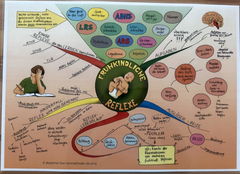
⚙️ Mind Map: Prefixes – These make things smaller!
💡 Understand the prefixes before SI units in mini-format
Milli, micro, nano, pico... how small is "small" really?
This lovingly designed mind map shows how prefixes before SI units reduce sizes – and finally makes abstract measurements tangible!
Ideal for lessons in mathematics, physics, chemistry or technology – but also for anyone who really wants to understand the principle of units of measurement.
📘 Contents at a glance
This mind map explains the most important prefixes that make values smaller:
With vivid examples (e.g. millimeter, micrometer, nanosecond),
wordplay for easier recall ("A blink of an eye = 1 ms")
and small illustrations that make learning lively.
In addition, the mind map contains practical mnemonics on spelling, exceptions and the use of prefixes in everyday life and in science.
🎯 Ideal for:
-
Students from grade 5 (mathematics, physics, chemistry, technology)
-
Teachers and learning coaches for visualizing orders of magnitude
-
Parents who want to explain learning content clearly
-
Technology enthusiasts and hobbyists who work with units of measurement
📦 Mind maps in paper and digital format
Ready-made learning mind maps for immediate use
Our mind maps are designed to make learning easy, structured, and brain-friendly. They summarize the most important content at a glance and make complex knowledge understandable.
Your options:
📄 Colored PDF – download immediately and use digitally or as a high-quality print version (A3, A4 or A5)
⚫ Digital black-and-white version (PDF) – perfect for printing or designing
✏️ Gap mind map (PDF) – ideal for practicing, reviewing and consolidating
📦 Complete package – colored PDF, black-and-white template and gap mind map together
❗ Note: The paper version is exclusively available as a colored print version.
🧠 Conclusion
With this mind map, the invisible becomes visible: How small is a micrometer, how tiny a nanometer?
A must-have for every classroom – because whoever understands orders of magnitude understands the world of numbers!