Are you a trainer, coach, teacher, mother, or father? Then you might be familiar with this situation:
Something is wrong with the child. Something is bothering them, but they won't talk about it. Are they being stubborn? Do they just not want to talk to an adult? Do they perhaps not trust you?
But maybe they can't even express their worries, because these are not on a rational level, but somewhere much deeper. There are simply no words for them. They look at you helplessly and just shrug their shoulders.
But to find out where to start to help the child, we need communication, don't we?
However, the children's worries, their helplessness, their frustration, their fears are there. But who likes to talk about them? The reasons can be so diverse: bullying, extortion, child abuse, stress at home or at school, fear of failure are unfortunately everyday occurrences in our schools.
This was the impetus to develop the game Door Opener. I needed something to get children to talk somehow.
But the direct approach didn't seem appropriate. So I wanted to develop a game that would bypass verbal (blocked) communication.
Few Rules
Not all game pieces have to be used.
Problems should only be laid with the white side, goals, wishes and dreams with the golden side.
Step-by-step approach (suggestion)
Step 1 Acclimatization phase
Here you have to judge for yourself how long this phase should last. I recommend not moving to step 2 too early.
First, I ask the child to create something with the white tiles, and I have to guess what it's supposed to be. Of course, I deliberately act a bit clumsy and "don't immediately realize that there's a house in front of me."
Once I've guessed it, I let the child guess my picture. We simply play together by creating pictures.
Then we move on to creating an animal. The child always enjoys this more, as they apparently have nothing to fear. It becomes a very informal atmosphere. Gradually, I guide the conversation towards the topic of school. Here too, non-committal topics can be created. For example, pictures on the classroom wall.
Step 2 Identifying worries
At an appropriate point, however, I imperceptibly transition to a topic where there might be an issue.
Perhaps in math class. "Create a picture: ..... and the math problems."
The child still doesn't have to talk about it. Their hands move, they try things out, they push things back and forth. In the end, a picture is formed.
"You'll have to explain to me what all this means. Where are you in your picture?"
And so far, I've always gotten an answer, and we've been able to delve into the actual topic.
Problems are described, sometimes hopelessness, frustration, anger, feeling unfairly treated, inferiority complexes, negative beliefs, fears,
sadness that the friend is now learning in another school... emerge massively.
Step 3 What needs to improve? Who needs to change? What needs to be done?
Now, however, the golden side of the tiles comes into play. With these, a desired outcome is to be created. Usually, this picture turns out to be significantly more symmetrical and harmonious.
Afterward, let them talk about it, ask why, to further strengthen the wish.
"Feel into it. How would it be if everything turned out for the best like this?"
"What would need to change to achieve this goal?"
"Who would need to change?"
"What would you have to do differently to achieve this goal?"
Possible variations
The tiles can also be used in an arrangement. Creating figures, perhaps even directly incorporating name tags.
Again, have them create a school situation with different actors.
Feel into each person. What do they feel? What do they think?
The resulting change of perspective often has a liberating effect. Or at least sets a process of rethinking in motion.
Individual people could be depicted elevated - several tiles on top of each other indicate the importance of a person. Authorities are represented.
Or it can simply be left to the imagination, and there's a cheerful picture guessing game.
Good luck using our Door Opener.
I would be very happy to exchange experiences.
Best regards,
Jens Voigt
Das ist mal eine super Übersicht zu diesem Thema, als Einstieg toll!! Vielen Dank!!
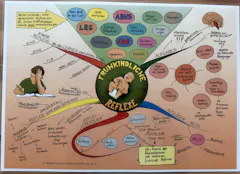
Mindmap Übersicht über die frühkindlichen Reflexe
Regina Schütt
Übersichtlich und flexibel zu gestalten.
Sehr gut für‘s merken.
Memoflip blanko 5er Paket
Helen Walter
Ein super Paket mit tollen Spielen und Lernmaterial. Die Videolektionen sind anschaulich erklärt und das dazugehörige Lernmaterial wird auch gleichzeitig vorgestellt. Jens liefert praxisnahe Beispiele und Aufgaben zum Verständnis und zur Anwendung. Die Präsenzseminare sind das Allerbeste. So konnte ich die Akademie leibhaftig kennenlernen und mich mit anderen angehenden Trainern vernetzen und austauschen.
Learn2learn Trainerausbildung
Andrea Schünemann
Tolle Zusammenfassung. Optisch sehr ansprechend. Sehr gut finde ich die jeweilige Verlinkung zum Shop und zum Videotutorial mit QR Code.
Lauras Lernmethoden - Block
Gitta Meichsner
Diese Liste ist ( wie jede andere) bestens geeignet, um Lernstoff damit zu verknüpfen. Sie ist sehr ansprechend gestaltet.